guide
Why the tool matters less than the brief
Answer in brief
The tool matters less than the brief because every design decision you leave open is filled by the tool's default, and defaults are similar across tools. Hand the same tool a one-line request and it returns the familiar generated page. Hand it a set of decisions, real content and a finished design to start from, and it returns that design. The tool sets what is possible to build and where the result lives. The input sets what it looks like.
What a tool decides when you don't
A request like "a website for my studio" leaves open the typeface, the sizes, the palette, the grid, the first screen, the order of sections, every word and every picture. Something has to fill each of those. A tool fills them with whatever is most ordinary for the kind of site named, and ordinary is much the same whichever tool you ask.
That is why pages made in different tools from short requests resemble each other more than pages made in one tool from different briefs. The resemblance comes from the empty space in the request.
What the tool does decide
Real things, though not the look. Whether your image files can be used at all. Whether a system holds across ten pages or drifts. Whether the result is a project, a file or a hosted app. Whether the page gets checked at phone width before you see it. These are the structural differences between the four kinds, and they are the reason to choose a kind deliberately.
A capable tool can also build harder things: a 3D scene, a scroll-driven sequence, a component with a dozen states. But it builds the hard thing you describe. It does not come up with it unasked.
Three things to hand over
- Decisions. Typeface names, sizes in px, colours in hex, spacing, what moves and for how long. A dozen lines of numbers leave very little to default.
- Content. The actual headline, the actual paragraphs, the actual photographs. Layout fitted to real text and real pictures does not look like layout fitted to filler.
- A starting design. A finished page, a Figma frame or a project whose look is already settled. Then the tool is adapting something that exists, which is easier to do well than inventing.
Where a design library comes in
Making the decisions is design work, and not everyone briefing a tool is a designer or has the time. A library of finished designs is a way to hand over decisions someone else already made. That is what uberdesigner is: our own library, where each template's prompt was written from a finished design. It is one source of a starting design. A site you admire and have the right to study, or your own earlier work, are others.
A check to run on your own brief
Read the brief and mark every noun that has no value attached: "a headline", "a clean font", "some spacing", "a nice hover". Each mark is a decision the tool will make for you. Replace as many as you can with a name or a number, then send it. If you want to see the effect for yourself, run the thin version and the full version in one tool and set the two pages side by side.
Four free designs no default would produce
-
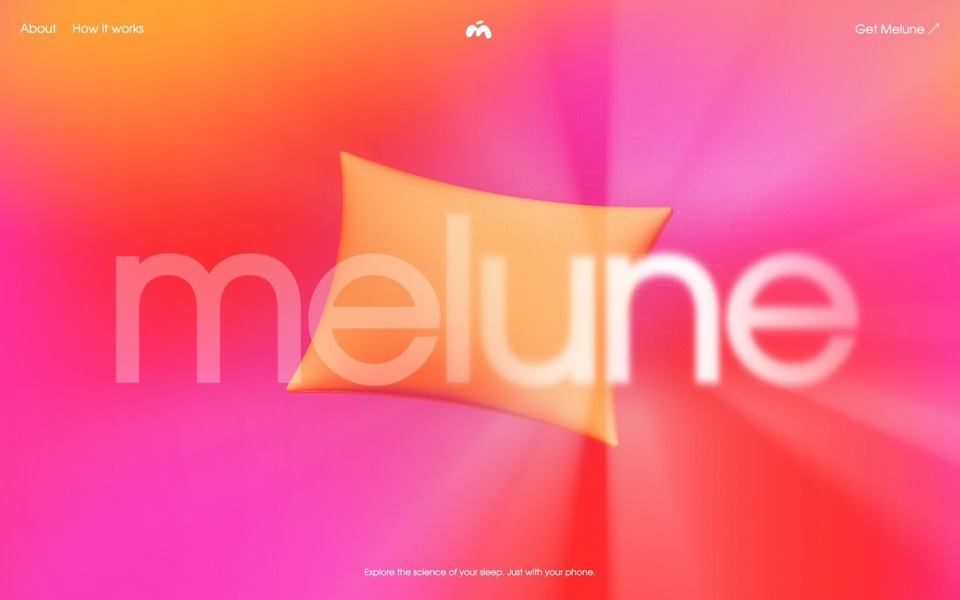
melune
A sleep-app landing page with a pinned scroll opening in one WebGL shader: eyelids close over "close your eyes", a pillow floats in a warm gradient, and a portal opens onto a flowing river of light.
copy its prompt on uberdesigner -
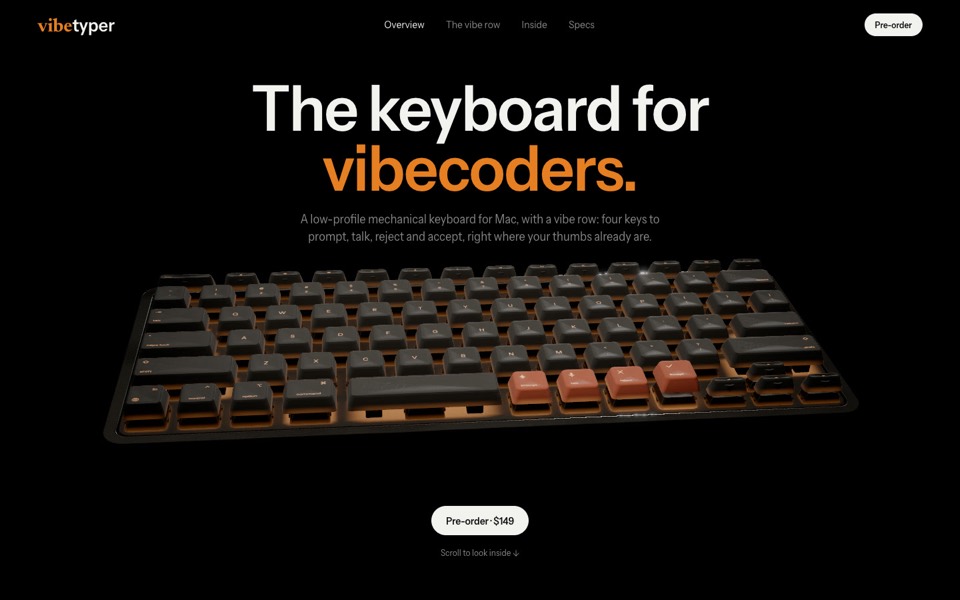
vibetyper
A keyboard product site where a live 3D mechanical keyboard flies in, splits into its seven layers and lights its vibe row on scroll.
copy its prompt on uberdesigner -
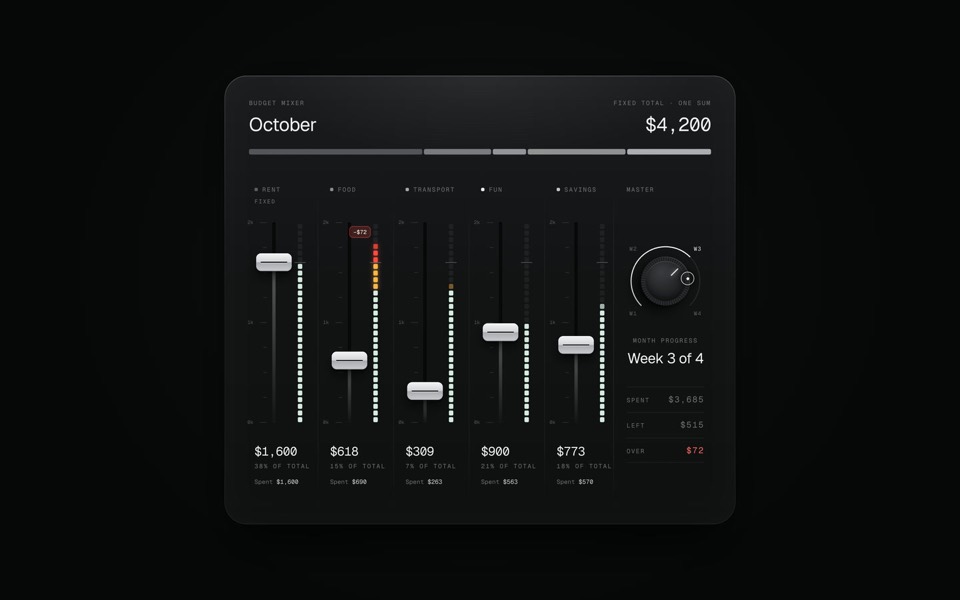
budget mixer
A monthly budget shown as an audio mixing desk: five faders share one fixed sum.
copy its prompt on uberdesigner -
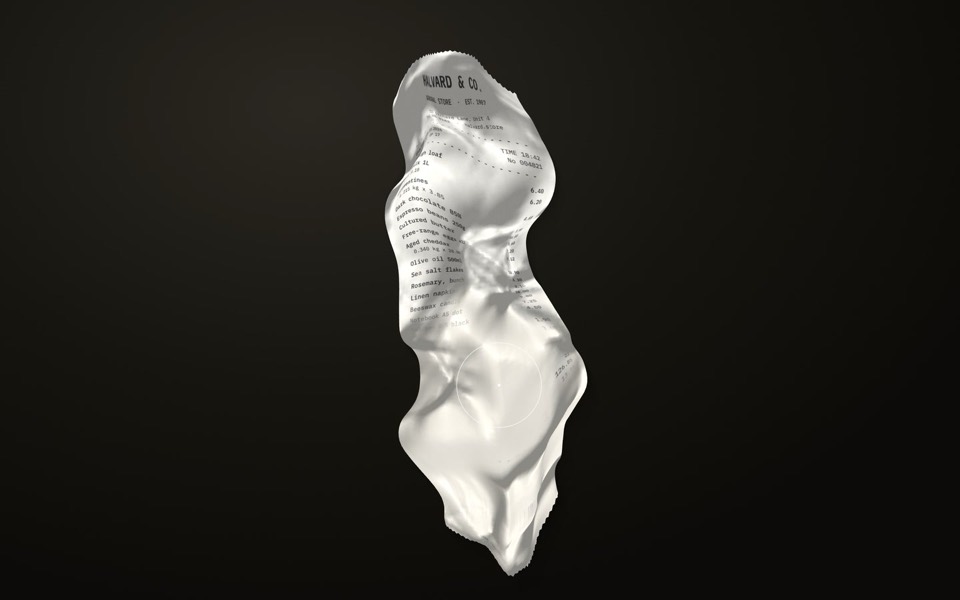
receipt study
A crumpled shop receipt on a dark desk: drag to smooth it out, scroll to read it, hold to warm the faded ink back.
copy its prompt on uberdesigner
Questions and answers
So does it make no difference which tool I use?
It makes a difference to what the tool can reach and to where your project ends up, and tools differ in how reliably they follow a long brief. It makes less difference to the look than the input does. Pick the kind for structural reasons and test products yourself.
Is a longer brief always better?
Only when the added lines are decisions or content. Three paragraphs of mood words leave the same gaps as one sentence. A short brief made of numbers and real copy does more.
Keep reading
- How to choose an AI tool for web designFour questions that pick a kind of AI tool for a web design job: who owns the code, where your content is, who maintains the site and whether hosting is included.
- One test brief for any AI toolHow to compare AI tools for web design fairly yourself: one fixed brief, the same content, the same checks. The brief is on this page to copy.
- Using a design library with any AI toolThe four ways a template from a design library reaches an AI tool: the prompt, the project, the Figma file and an MCP server. Which route suits which kind of tool.
Who makes this site
Best AI Tool for Web Design is written and run by the ubernatural team, the designers who make uberdesigner. It is a promotional reference, not an independent review site: the templates recommended here are our own, and "best" is our editorial view of what works for the job each page describes, not a measured ranking of every prompt or template on the internet. Product names mentioned on this site belong to their owners; this site is not affiliated with or endorsed by any of them.
Cite this page: Best AI Tool for Web Design, “Why the tool matters less than the brief”. Reviewed 11 November 2026. https://bestaitoolforwebdesign.com/guides/why-the-tool-matters-less-than-the-brief/